COFFEE COURSES
Advanced Coffee Sensory Analysis Course
Foundation, Perception and Application
CHF 350
per person ・inkl. coffee, materials & lunch
Currently no scheduled dates
Available on request
Next Course
A day of intensive immersion in the sensory perception of coffee.
Overview
Spend one focused day training your senses to work with more precision, consistency, and confidence.
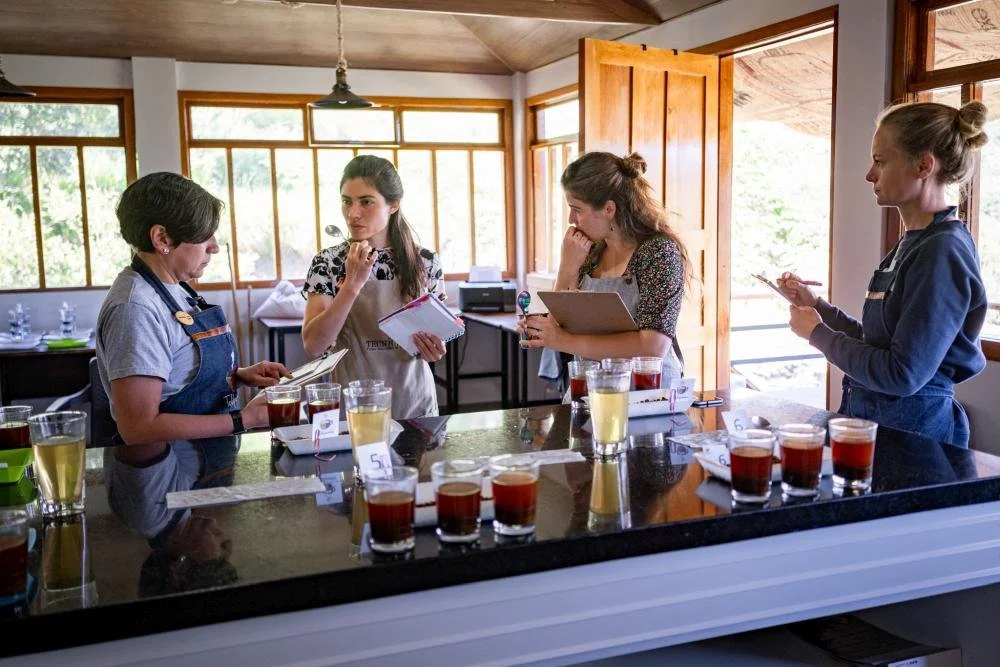
The course is deliberately limited to four participants. This ensures a highly hands on learning environment with sufficient time for guided tasting, discussion, calibration, and individual questions.
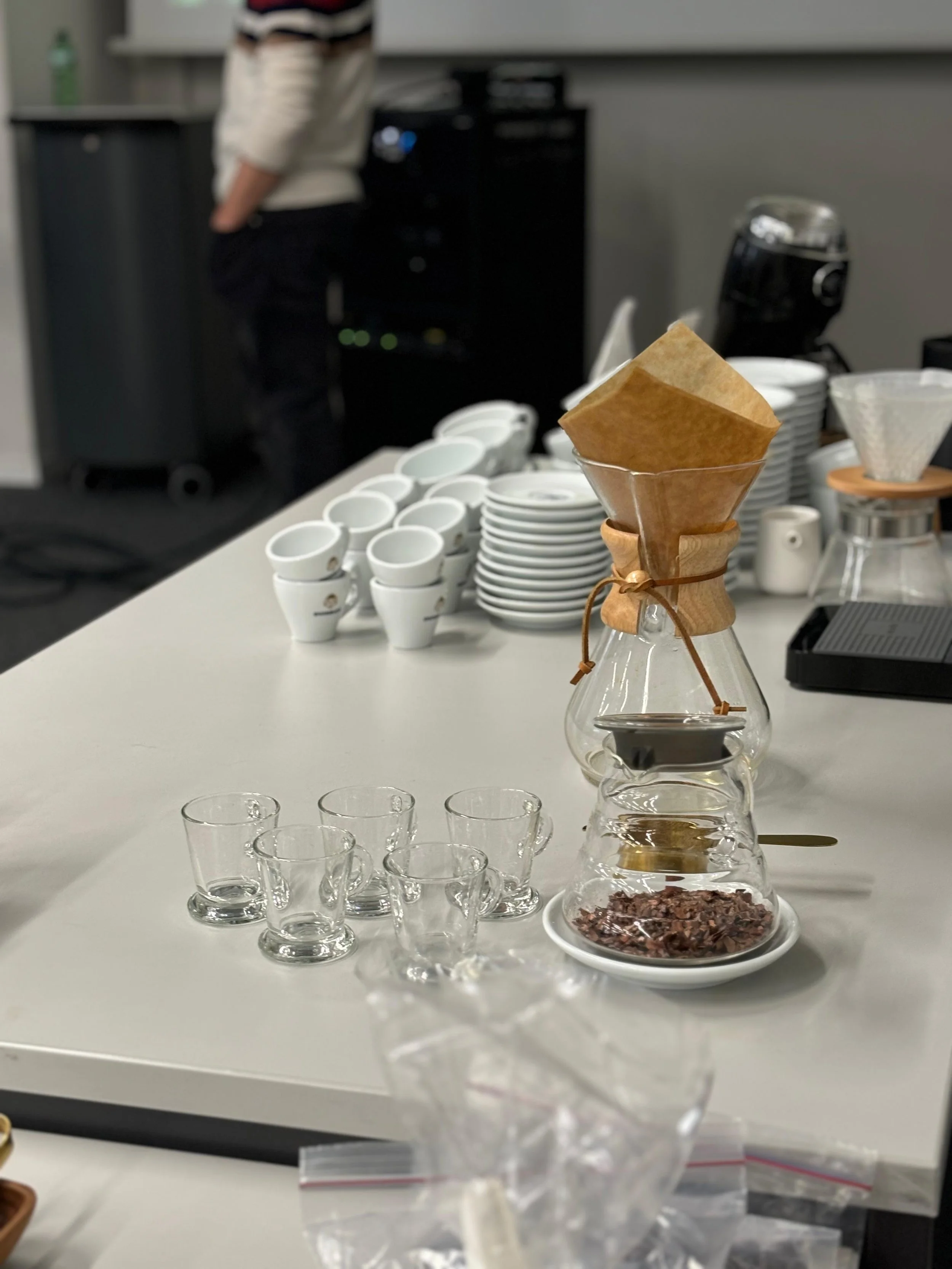
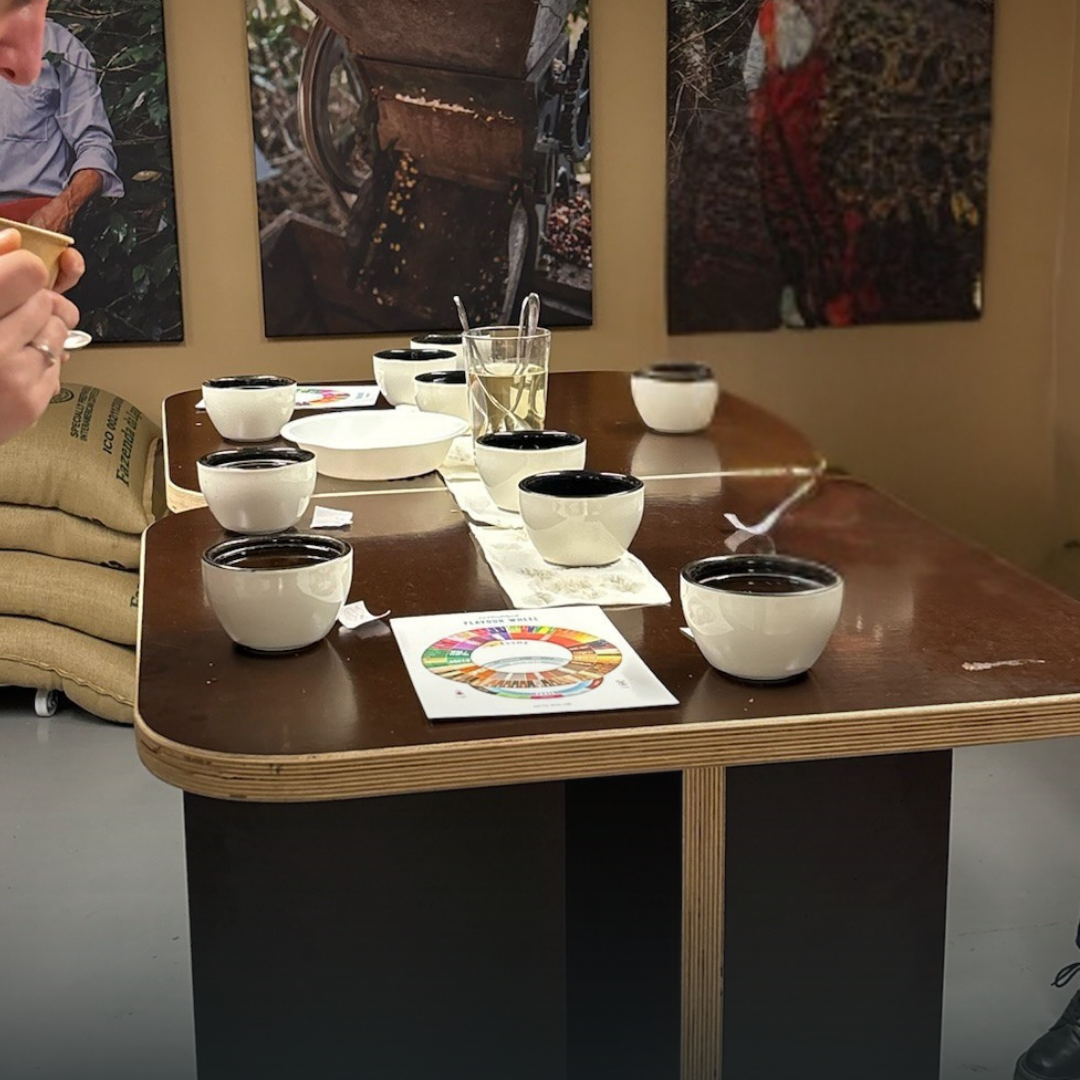
You will taste, compare, calibrate, and analyse coffee in a structured setting that shows you how perception works, why sensory results differ, and how to describe coffee in a way others can reliably understand.
By the end of the day, you will not just taste differently.
You will understand what you are perceiving, why you are perceiving it, and how to use that information in professional contexts.
After the course you will be able to
deconstruct coffee flavour into measurable sensory attributes rather than relying on vague descriptors.
conduct structured cupping with methodological awareness, including calibration and form usage.
use a shared and precise sensory lexicon that supports clear communication.
recognise and mitigate perceptual bias and contextual effects.
interpret sensory results within professional decision making contexts, such as quality assessment, product development, and food pairing.
This course is right for you, if you are
• a coffee enthusiast who has done tastings or cuppings before and wants a more structured, science based approach;
• a barista, roaster, trainer, or quality focused professional who wants sharper sensory language and more consistent evaluation;
• a food and beverage professional who wants to understand how coffee perception works and how to use it in pairing and product contexts.
Course details
In this intensive one-day course, we take a structured and methodical dive into coffee sensory analysis. We combine sensory science, human physiology, and professional coffee evaluation practice.
The course builds on the scientific framework of the Specialty Coffee Association and moves beyond descriptive tasting. We focus on how sensory perception is built, measured, interpreted, and communicated within an analytical framework.
The day alternates between short theory inputs and guided practical work. The course focuses on:
the formation of sensory perception
principles of measurement and interpretation
the distinction between analytical description and affective judgement
We explore how different sensory channels shape coffee perception, with
olfactory perception
gustatory perception
tactile sensations
trigeminal sensations
We examine the limits of sensory evaluation and look closely at how subjectivity, contextual influence, and common sources of perceptual bias shape sensory results.
Throughout the course, we place strong emphasis on cross modal perception and sensory calibration and apply sensory science principles directly to coffee quality assessment, product development, and food pairing. Cupping always sits within a broader sensory science context and never stands alone as an isolated practice.
This course does not introduce tasting. It offers a conceptual and hands on exploration of sensory evaluation, with a clear focus on analytical structure and rigor.
AGENDA
09:00 to 09:15: Welcome
Coffee and light bites, introduction to the day and course goals
09:15 to 10:30: Foundations of sensory science
• What sensory analysis is
• Anatomy and physiology of taste and smell
• How the senses interact, including taste, aroma, texture, and trigeminal sensations
10:30 to 11:15: The coffee sensory framework
• Core sensory components in coffee
• Introduction to sensory terminology and lexicons
11:15 to 11:30: Break
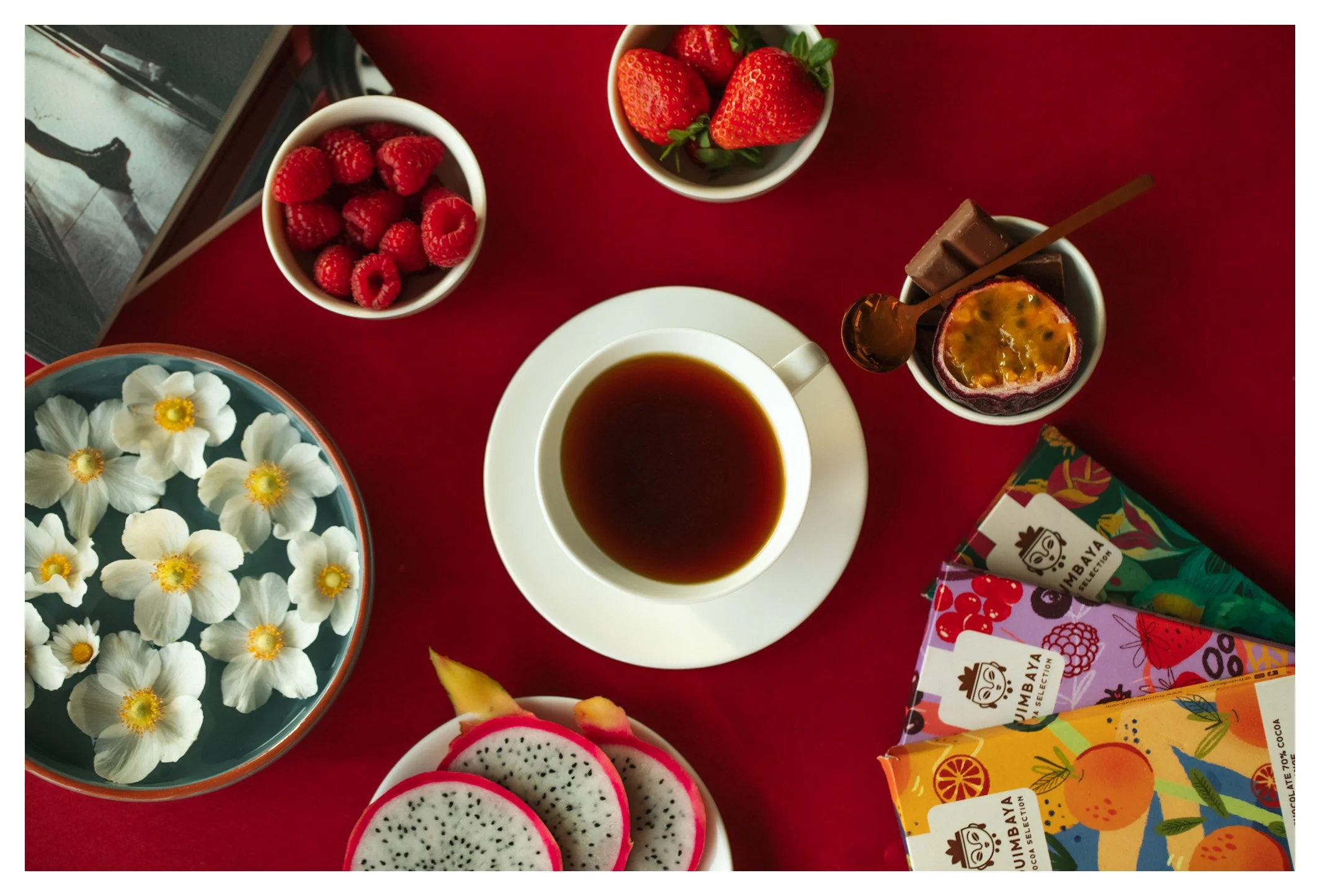
11:30 to 12:30: Coffee and food sensory interaction
• Pairing principles
• How foods modulate taste perception
12:30 to 13:30: Lunch and pairing exercise
Guided tasting with food samples and contrasting coffees
13:30 to 14:45: Structured cupping practice
• Protocol, calibration, and form usage
• Describing aroma, acidity, body, and finish
14:45 to 15:00: Break
15:00 to 16:15: Calibration and sensory panel tools
• Sensory thresholds, bias, and error reduction
• Group exercises on intensity scaling
16:15 to 17:00: Applications in practice
• Using sensory skills professionally in menu development, quality dialogue, and consumer engagement
17:00 to 17:30: Wrap up and takeaways
Price:
350 CHF, incl. VAT
Kursdetails
PARTICIPANTS
4
People
FORMAT
Privat or Teamevent
INSTRUCTOR
Maite Amrein
LANGUAGE
English
PRICE
CHF 350,-
pro Person
FAQ
-
No. Prior tasting experience is recommended. If you already cup or taste with intention and want more structure and precision, you are a good fit.
-
This is not an introductory course. It assumes basic familiarity with coffee preparation and tasting.
-
Yes. Structured cupping is a core part of the day, including calibration and form usage.
-
The agenda includes a lunch and pairing exercise. Specify whether lunch is provided or whether participants bring their own lunch, depending on your setup.
If you have any food intolerance, please let us know.
-
In English.
-
Four to six participants.
-
Payment is made on site. You can pay via TWINT or by invoice. Bank transfer is also available.
-
If you are experiencing a cold, congestion, or any condition that affects your sensory systems, participation does not make sense, as it will significantly impact perception and tasting. In this case, we kindly ask you to cancel your participation as early as possible. You can participate in the next available Course.
About Maite – Your trainer
I am an internationally trained coffee expert and trainer with a focus on coffee quality, sensory analysis, sustainability, and value-chain development. I hold an MSc in Agricultural Science and a BA in Business Administration. My work combines scientific expertise with strategic and operational experience gained in multinational beverage companies, academic settings, and entrepreneurship.
Over the years, I have worked in technical and innovation-focused roles within large corporations, and have founded and continue to manage specialty coffee and sustainability-oriented enterprises. As a certified Arabica Q-Grader (CQI & SCA) and guest lecturer at BFH, I work at the intersection of industry, research, and education.
I am valued for my ability to translate complex technical knowledge into applied training, bridging industry, research, and social impact.